-
Robotics Innovation Center
Research Infrastructure Management Center
Mission
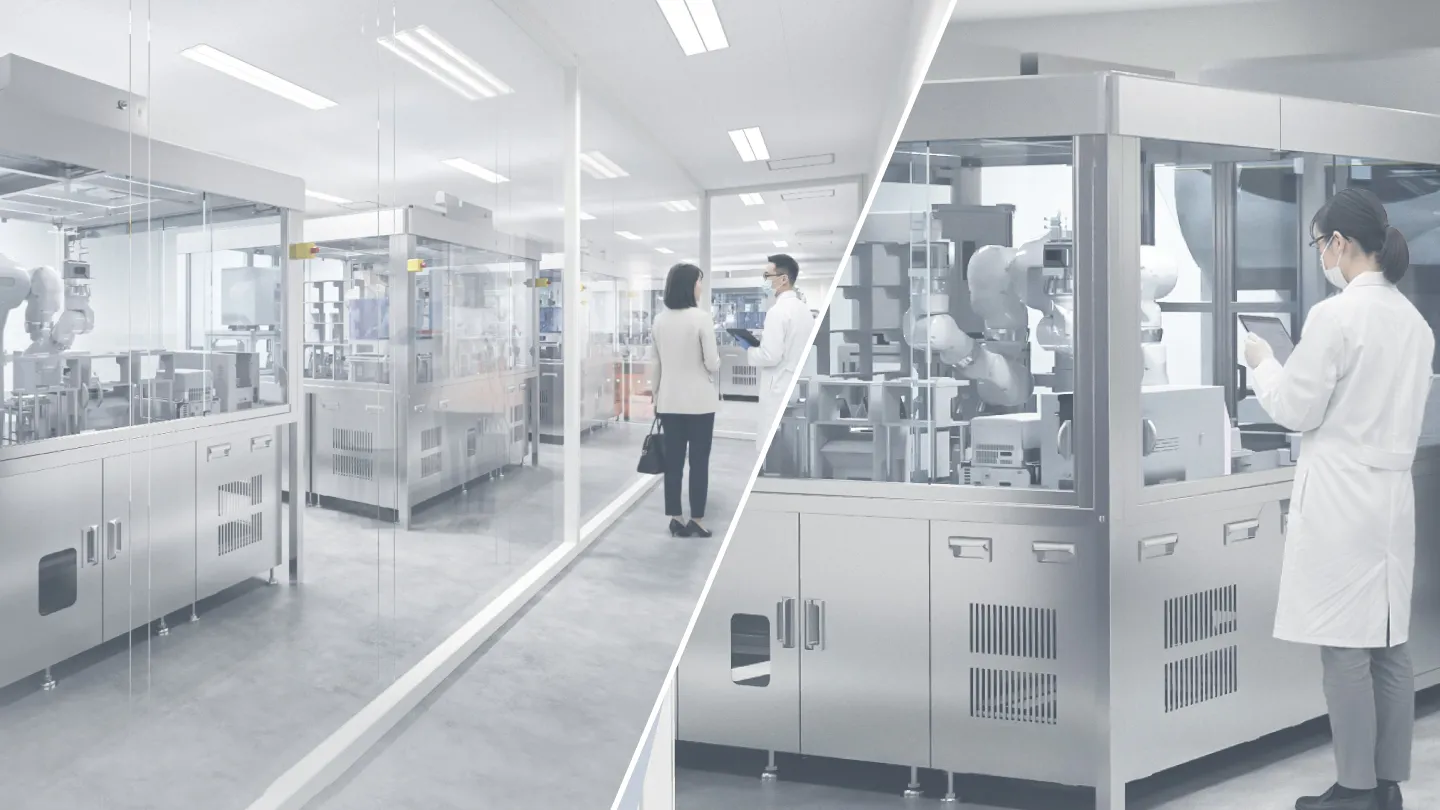
Robotics Innovation Center (RIC) aims to shape a future in which AI-powered robots autonomously and reliably perform experimental workflows, advancing scientific research both at our university and around the world.
Directors
Director: Keiichi Nakayama (Distinguished Professor)
Deputy Director: Genki Kanda (Professor)
Message from the Director
Japan faces an urgent challenge in sustaining and advancing its research infrastructure as the scientific workforce continues to shrink due to demographic decline. Our center addresses this issue by applying Japan's world-leading robotics industry to the life sciences and establishing an autonomous experimental platform powered by AI and robotics. Precise and consistent robotic operations simultaneously improve research efficiency and help resolve the long-standing reproducibility challenges in the life sciences. A diverse set of robots, including the Maholo LabDroid perform complex and long-duration experiments that are difficult to accomplish by hand, allowing researchers to focus on more creative and conceptual scientific activities. We will continue to refine this system together with collaborators inside and outside the university and contribute to strengthening Japan's scientific foundation and its translation into industrial applications.
Overview of the Center
Our Activities
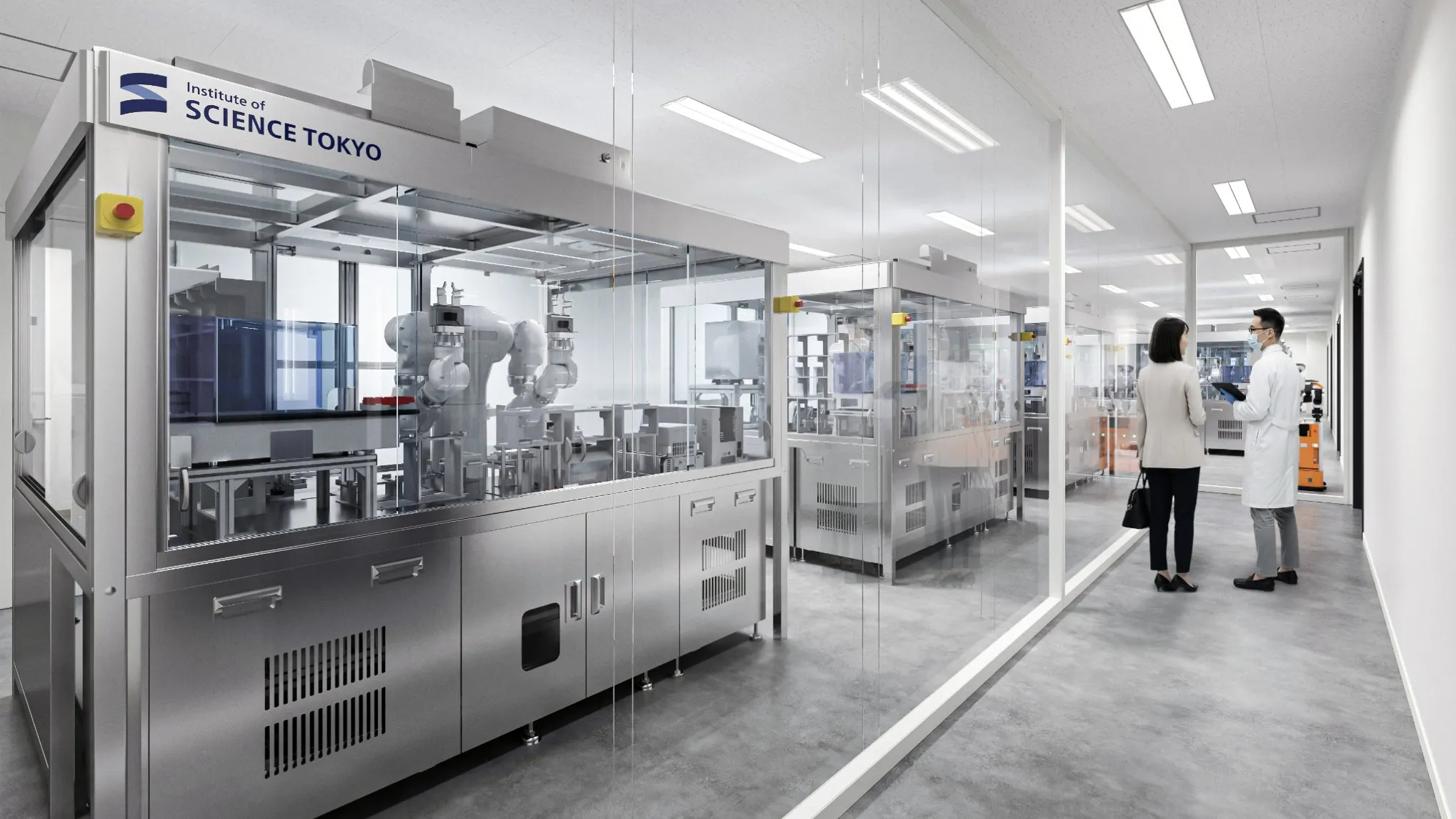
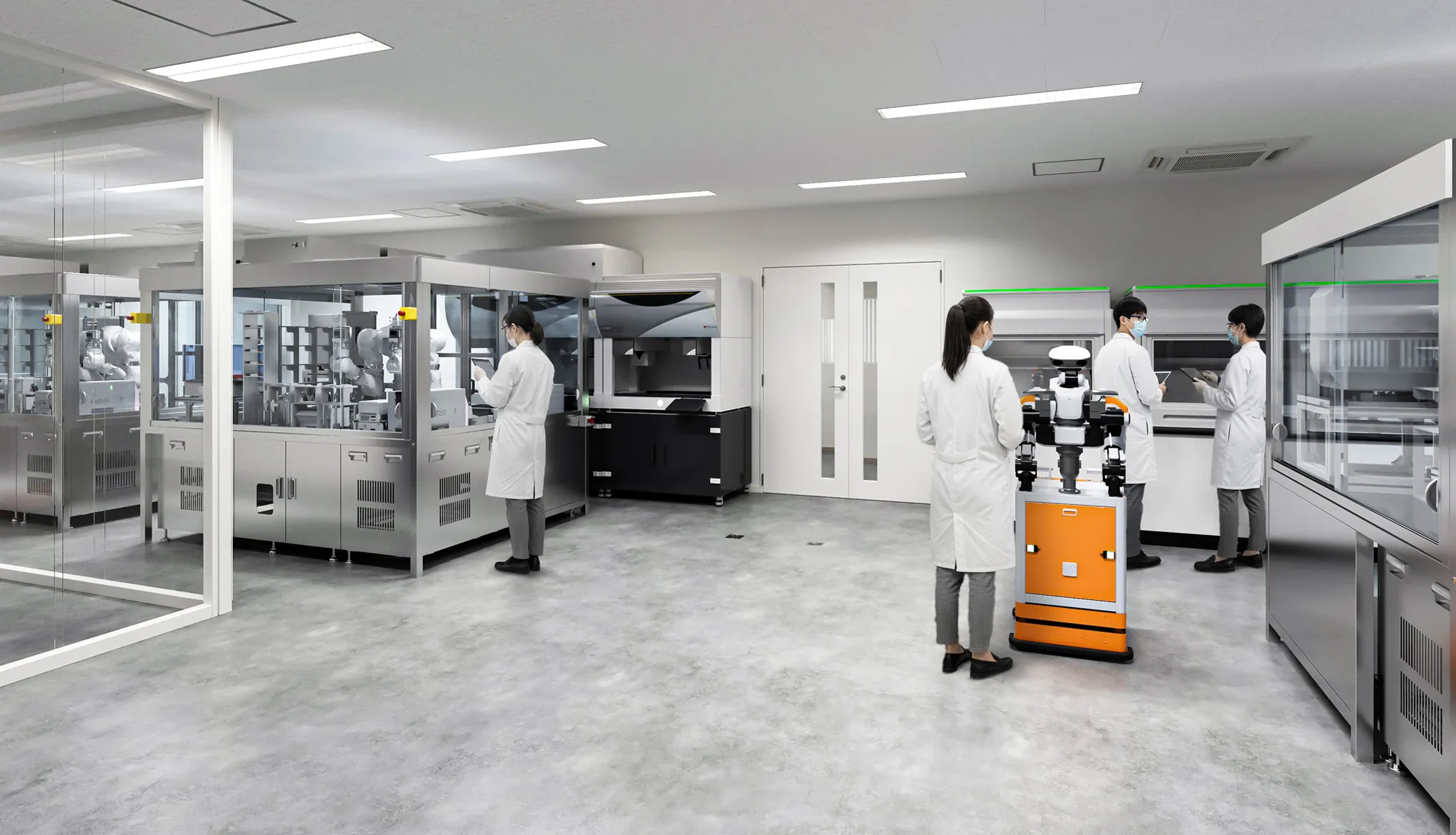
RIC promotes both research efficiency and data quality by deploying AI-equipped robots capable of autonomously and automatically performing experimental workflows. A dedicated robotic experimentation facility has been established on the Yushima Campus of the Institute of Science Tokyo, where we manage and operate robots such as the Maholo LabDroid, support and educate users from both inside and outside the university, and develop AI technologies to further enhance facility operations. We provide multiple usage models, ranging from fixed-menu robotic experimental services, customized program adjustments tailored to specific research themes, to time-based access for users who can operate the robots independently. Looking ahead, RIC aims to develop a next-generation research infrastructure that integrates autonomous experimentation and cloud-based operation, contributing broadly to life science research both in Japan and internationally.
Facility Overview
RIC is located on a dedicated floor within the M&D Tower on the Yushima Campus and is equipped specifically for robotic life-science experimentation. We are installing multiple robotic systems—including the humanoid Maholo LabDroid, automated liquid-handling systems, and other experimental robots—to support a wide range of protocols. The facility includes incubators, analytical instruments, and other essential equipment designed to enable efficient, high-reproducibility robotic workflows.
History
October 1, 2025: Establishment of the Robotics Innovation Center (RIC)
April 1, 2026: Full operation of the robotic experimentation facility
April 15, 2026: Opening ceremony and inaugural symposium (page in Japanese only)
Facility Use
This facility is operated as a shared-use infrastructure. For the current status, please refer to the information below.
Researchers at Science Tokyo
RIC is working to establish a shared-use framework for researchers within the university. A pilot program is planned for FY2026, and details will be announced through the website and internal university communications.
External Researchers and Organizations
RIC welcomes interest from both academia and industry. The institutional framework governing usage terms, fee structures, and contractual arrangements is currently under development. A pilot program is planned for FY2026, and details will be announced through the website and other channels once arrangements are in place. Please note that additional procedures may be required for users based outside Japan.
Access
Address
M&D Tower 20F
1-5-45 Yushima, Bunkyo-ku, Tokyo 113-8510
Japan
Contact
We accept inquiries via email only.
Please note that depending on the nature of your inquiry, it may take some time for us to respond, or in certain cases, we may be unable to provide a response.
ric [at] ml.tmd.ac.jp
Media Inquiries
For media and press inquiries, please submit your request through the university's official media contact page.
Institute of Science Tokyo – Media Contact